If a business needs leads quickly, paid ads usually feel like the cleanest option. You choose a budget, pick who you want to reach, launch the campaign, and traffic shows up. It’s straightforward, and that’s why it’s tempting. Organic takes more patience, so organic SEO services sometimes get questioned early, even when they’re building the kind of visibility that lasts.
Here’s what most companies figure out after spending serious money: ads and organic work are not enemies. They solve different problems. The better question isn’t “Which one wins?” It’s “Which one fits how this business sells, what it can realistically spend, and how quickly it needs momentum?” Once you answer that, the choice stops feeling confusing.
What Organic Growth and Paid Ads Really Buy You
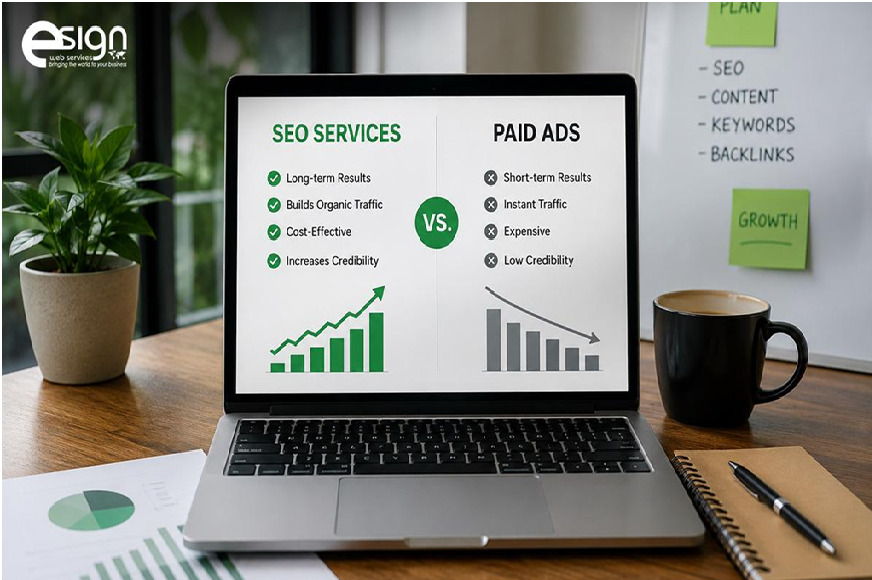
Paid campaigns mainly buy speed. If your targeting is tight and your offer makes sense, you can generate leads quickly, test ideas fast, and scale what’s working. That’s valuable when the business needs predictable volume or has a time-sensitive push.
Organic growth buys something different: trust and staying power. Instead of paying for attention every day, you build pages and content that keeps bringing in the right people over time. The catch is that it’s not instant. You put in work upfront, and then results build as the site earns more visibility and credibility. For a lot of brands, the best move is using ads for short-term demand while building organic strength underneath.
Speed vs. Staying Power: the Real Tradeoff
Ads shine when you’re starting from scratch, or you need results now. You can bring in traffic quickly, see what converts, and adjust without waiting months. If you’re launching a new service, testing a new location, or trying to hit a near-term target, paid campaigns can give you real traction.
Organic tends to work differently. It compounds. A solid service page can keep sending qualified inquiries long after it’s been published. Helpful content can influence decisions weeks later. Over time, that stability can reduce how dependent you are on constant spending. The upside is not only cost efficiency. Its peace of mind when budgets get tight or competition drives ad costs up.
Cost, Control, and the Risk of Relying on One Channel
With ads, you can turn the faucet on and off. That control is convenient, but it also comes with a hard reality: when the spending stops, the visibility usually stops too. And in competitive industries, costs often rise. Something that used to work at a comfortable budget can become expensive without much warning.
Organic has its own risk, but it’s usually tied to inconsistency or shortcuts. Weak content, technical neglect and “quick win” tactics can slow progress or create unstable results. The steady approach is boring but effective: strong site structure, clear pages built around real intent, useful content, and credibility signals that make sense to people and to search platforms.
What to Expect from Organic SEO Services in a Real Business
The best version of organic SEO services is not a list of generic tasks. It’s a plan that matches how people search, how they decide, and what your website needs to do to turn interest into action. That usually means technical cleanup, page improvements, content planning, internal linking, and ongoing refinements based on what the data shows.
The real goal is not prettier charts. It’s better business outcomes. A strong program improves visibility for high-intent searches, builds trust, and increases the quality of inbound inquiries. You’ll notice it when the right people start finding you, asking sharper questions, and moving forward with less hesitation.
When Paid Ads Are the Smarter First Move
Sometimes, paid campaigns are simply the right starting point. If you need leads quickly, if you’re testing a new offer, or if your organic presence is basically invisible, ads can help you learn fast and drive immediate results. They’re also useful when you need tight control, like targeting a specific industry, role, or service area.
Ads also teach you things that can make your organic work better. The messaging that converts into ads can become your page headlines and calls to action. The objections you hear from leads can turn into better content. In that way, paid isn’t only a growth channel. It’s a feedback tool that improves how you communicate.
Choosing Organic Search Engine Optimization Services for Sustainable Demand
If a business wants steady demand that doesn’t disappear the moment spending pauses, organic search engine optimization services become a long-term investment. This is especially important for businesses with longer buying cycles, high trust requirements, or industries where ad clicks are expensive.
A sustainable approach builds a website that answers real questions clearly and makes the next step feel simple. That includes strong service pages, helpful supporting content that reduces doubt and clear paths from research to conversion. Organic traffic often delivers better-fit leads because it meets people during their decision process, not just when they click impulsively.
When an Organic SEO Specialist Makes More Sense than a Full Agency
Not every business needs an agency. Sometimes you need one sharp person who can audit the site, spot what’s holding it back, and guide improvements with focus. An organic SEO specialist can be a great fit if you already have someone in-house who can execute, like a writer, developer, or marketing manager, and you mainly need direction.
This option can work well when you want experienced thinking without paying for layers of account management. The right specialist will focus on the highest-impact fixes first, connect strategy to buyer intent, and keep the work centered on what drives conversions, not what looks impressive in a presentation.
Questions to Ask Before You Commit
A strong working relationship starts with clarity. Ask what they would tackle first and why. Ask how they choose target pages and topics. Ask what success looks like in your market and how they’ll report progress without dressing it up.
Also, ask how they work with your team. Organic improvement touches content, technical work, messaging, and conversion flow. If the person can’t work within your real constraints, the plan won’t translate into results. The best partners stay practical. They prioritize, adjust, and help you build momentum without turning your marketing into chaos.
Conclusion
Choosing between organic growth and paid ads isn’t about picking a winner. It’s about choosing the right mix for your timing, budget, and goals. Paid campaigns can create quick momentum, while organic work builds lasting visibility and trust that grows over time. The strongest strategies usually combine both, using paid for immediate demand and organic for long-term stability, so growth doesn’t depend on a single lever.
For businesses that want a clear plan and steady execution, eSign Web Services can help. Their team can guide strategic decisions, tighten website performance, and build a growth approach that fits how a company actually sells, using their ideas to balance short-term lead flow with long-term strength.
Frequently Asked Questions
Question: Should a business run ads and organic growth at the same time?
Answer: Often, yes. Paid campaigns can create quick demand while organic work builds a foundation that keeps paying off. The main thing is keeping the message consistent across both, so people don’t feel like they’re seeing two different brands. When both channels point to the same offer and the same conversion path, results tend to improve faster. It also spreads risk if one channel gets more expensive. And it gives you more data to learn from.
Question: When do paid ads usually work best?
Answer: Paid works best when speed matters. It’s useful for launching something new, testing an offer, or targeting a specific location or audience. But ads only perform as well as the landing page and offer behind them. If the page is unclear, you’ll pay for clicks that don’t convert. The advantage is testing, because you can adjust quickly based on what you see. The best results usually come from ongoing tuning, not set-and-forget.
Question: Why do some businesses struggle with organic growth?
Answer: Usually, it’s because they’re targeting the wrong intent or publishing content that’s too thin to earn trust. Technical problems can also block visibility, and many sites lose conversions because the next step isn’t clear. Organic improvement works best when fixes happen in the right order. It also requires patience, because progress tends to build gradually. The companies that win are the ones that keep improving consistently. Sporadic effort rarely compounds.
Question: How can you tell if organic work is improving lead quality?
Answer: You’ll hear it in the conversations. People ask more specific questions, show stronger intent, and match your ideal customer profile more often. You may also see fewer “price only” inquiries and more people ready to schedule. CRM notes and call outcomes make this easier to confirm. Another signal is less back-and-forth before someone commits. When trust is higher, buyers typically move faster. That’s a strong sign you’re attracting the right audience.
Question: What’s a safe way to start if the budget is limited?
Answer: Start by reducing waste. Improve one high-intent service page, make the next step obvious, and fix the biggest technical blockers. If you run ads, keep them tight and use what you learn to improve the site’s messaging. Small, steady improvements usually beat scattered efforts. Prioritize what directly affects inquiries, not what only boosts traffic. Once you see traction, scale the parts that are already working. That’s how limited budgets build real momentum.